
When winter sets in and your yard goes quiet, tree care is usually the furthest thing from your mind. Yet, certified arborists know that late winter—specifically the month of February—is the single most advantageous window for residential tree maintenance. Navigating winter dormant pruning during this transitional period directly leverages your trees’ natural biological clock. By scheduling pruning cuts just weeks before the spring growth surge, you minimize pathogen exposure, protect the tree’s energy reserves, and set up rapid wound closure. At Jensen Star Tree, our ISA-certified arborists rely on this seasonal timing to keep regional shade trees, ornamentals, and fruit orchards vibrant, structurally sound, and storm-resilient year-round.
What Is Winter Dormant Pruning?
Dormancy is an adaptive physiological state of suspended metabolic activity in perennial woody plants. As photoperiods shorten and soil temperatures decline in late autumn, deciduous trees drop their foliage, pull essential carbohydrates down into their root systems and sapwood, and enter an overwintering rest period engineered for cold hardiness.
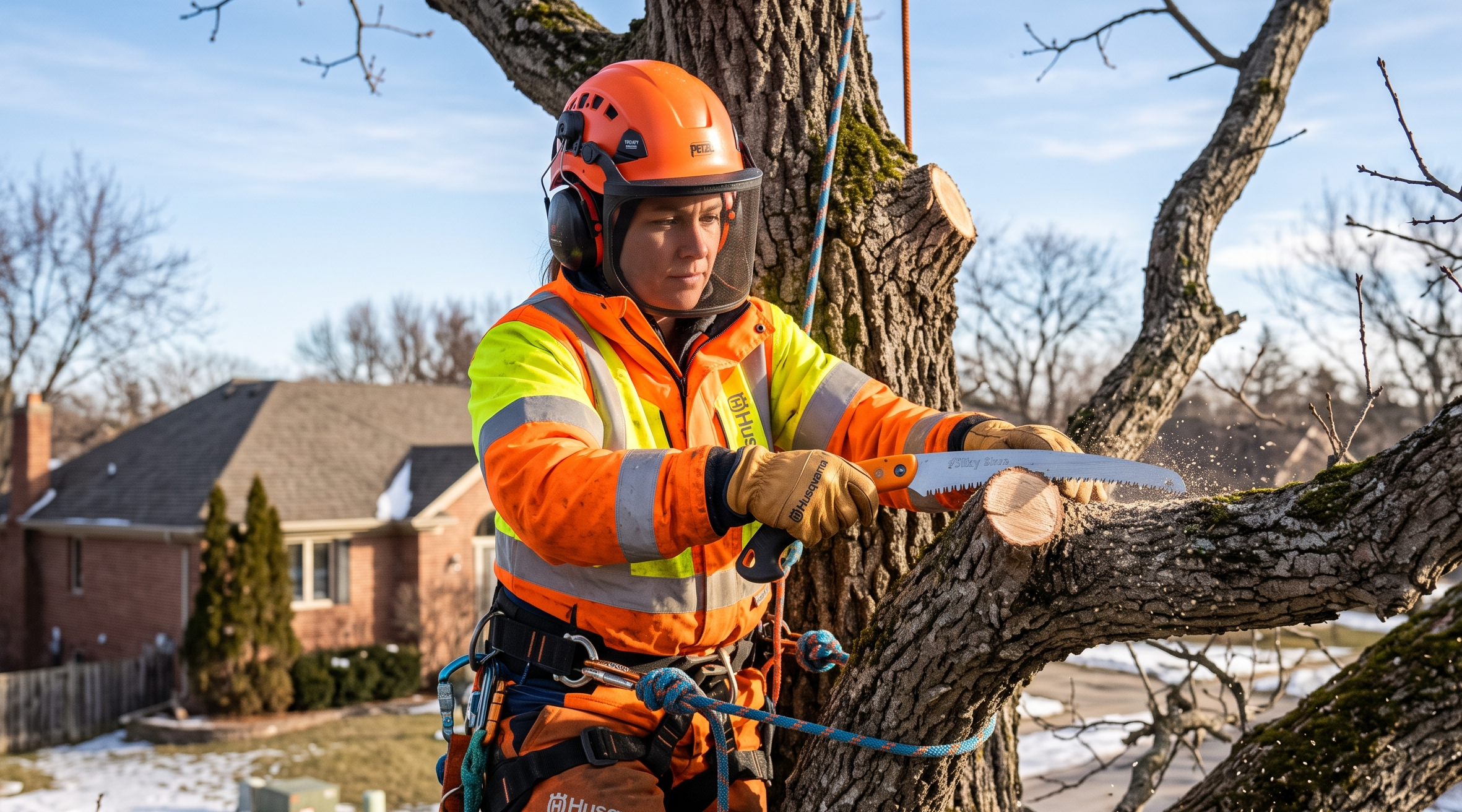
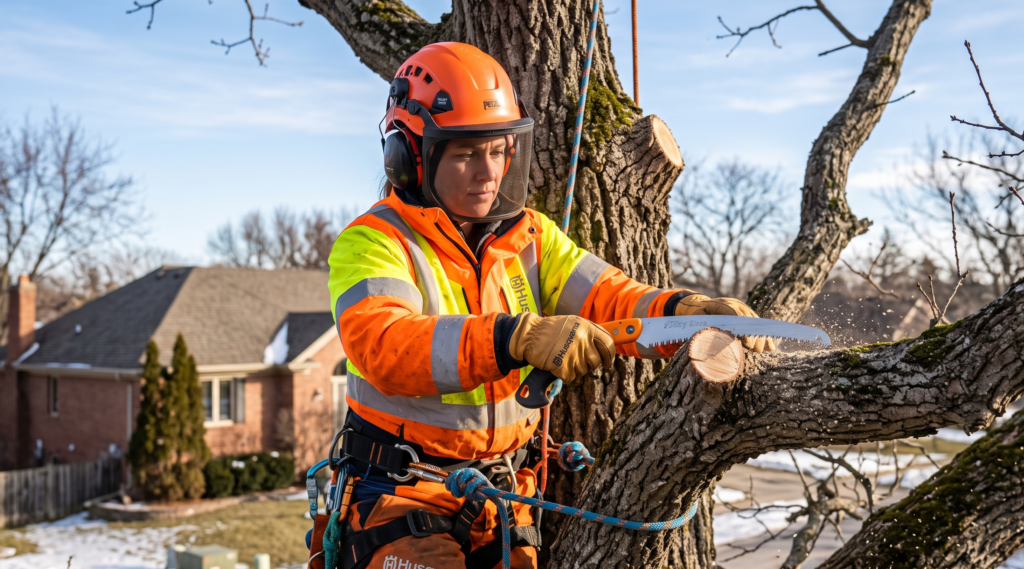
Dormant pruning refers to the selective removal, thinning, or structural training of woody branches while the vascular system is resting. Unlike summer trims—which remove active solar panels (leaves) and can trigger stressful secondary growth flushes—winter pruning works in lockstep with the tree’s dormant physiology. Pruning during this cycle causes virtually zero vascular shock, eliminates foliar tissue loss, and leaves the structural branch frame completely visible for diagnostic assessment.
Frequently Asked Questions
Q: Does winter dormant pruning hurt or shock the tree?
A: No. Dormant pruning causes significantly less stress than summer pruning. Because the tree is biologically dormant and its stored starches are sequestered safely in the root system and primary trunk, removing selective branches does not deplete the resources the tree needs for normal spring vigor.
Q: Can evergreens and conifers be pruned during winter dormancy?
A: While dormant pruning is primarily practiced on deciduous hardwoods and fruit trees, light maintenance on evergreens can be performed in late winter. However, significant shaping or reduction of pines, spruces, or firs is typically best reserved for late spring when new terminal shoots (candles) expand.
Q: How cold is too cold for pruning branches in winter?
A: Avoid pruning on days when ambient temperatures drop below 20°F (-7°C). Deeply frozen wood becomes brittle and glass-like, making it prone to radial splitting and tearing behind the saw cut, which damages the branch bark ridge.
The Biological Secret: Why February Cuts Heal Faster
Homeowners frequently ask, “If the tree is asleep in February, how can its cuts heal faster than in May?”
The answer lies in tree anatomy and how trees respond to physical injuries. Strictly speaking, trees do not heal; they seal. Through a biological compartmentalization process known as CODIT (Compartmentalization Of Decay In Trees), first defined by pioneering plant pathologist Dr. Alex Shigo, a tree constructs physical and chemical boundary walls around an open wound to isolate pathogens and prevent decay from migrating into the interior heartwood.
1. Minimal Exposure Time Before Cambial Activation
When a pruning cut is made in November or December, that open surface sits exposed through months of drying sub-zero winds, deep freezes, and fluctuating humidity without any active cell division.
By contrast, when a cut is executed in mid-to-late February, the tree is only 2 to 4 weeks away from bud swell and the spring cambial rush. As soil temperatures warm, root pressure pushes sap upward, and the vascular cambium—the thin layer of generative meristematic tissue between the bark and xylem—begins dividing rapidly. It forms specialized repair parenchyma that rolls over the cut surface as callus tissue, which matures into durable woundwood. Because the wound sits exposed for only a fraction of the time, the risk of tissue desiccation and opportunistic fungal infection drops drastically.
2. Full Carbohydrate Preservation
During late spring and mid-summer, a tree invests enormous energy reserves into expanding leaves, elongating shoots, and flowering. Cutting living branches in June or July strips away foliage that the tree spent precious starches to build, removing photosynthetic capacity before the tree can replenish those investments.
In February, the tree’s complete energy reserve is safely stockpiled inside the trunk, primary scaffold limbs, and root zones. Removing deadwood, crossing branches, or competing co-dominant leaders while dormant ensures that 100% of those stored resources are channeled into the remaining, well-spaced buds when spring arrives.
3. Fungal Spores and Pest Vectors Are Inactive
Most destructive wood-boring insects, sap beetles, and airborne fungal spores require ambient temperatures consistently above 50°F (10°C) to fly, feed, and reproduce.
- Oak Wilt (Bretziella fagacearum): Nitidulid sap beetles transmit this lethal vascular fungus by visiting fresh wounds. During freezing February temperatures, these beetles are dormant in leaf litter, making winter the safest period to prune oaks.
- Fire Blight (Erwinia amylovora): This bacterial scourge devastates apples, pears, and hawthorns. Pruning infected shoots during winter dormancy prevents bacterial ooze from spreading through sap streams or pruning shears.
- Dutch Elm Disease: Elm bark beetles are completely grounded by the winter chill, ensuring that fresh cuts on American or European elms do not draw devastating vector populations.
Frequently Asked Questions
Q: Why do arborists say trees “seal” rather than “heal”?
A: Unlike animal tissue, which regenerates and replaces damaged cells, trees cannot replace damaged wood cells. Instead, they produce specialized compartmentalization walls around the injury to lock pathogens out and then grow a completely new layer of wood over the top of the wound.
Q: What happens if I prune my oak tree in April or May instead of February?
A: Spring pruning exposes fresh sap to active sap-feeding nitidulid beetles carrying Oak Wilt spores. Pruning oaks between April and July carries a high risk of fatal disease contraction and is actively discouraged by arborists.
Q: Will late-winter pruning cause my tree to bleed to death from sap flow?
A: No. While species like maples, birches, and walnuts may “bleed” clear sap heavily from late-winter cuts, this fluid is primarily water drawn up by root pressure. It does not harm the tree or drain its energy reserves.
Structural Clarity: Seeing Through the Bare Canopy
Pruning a deciduous tree in full summer foliage is like trying to remodel a home’s structural framing without peeling back the drywall. Dense leaf canopies hide structural defects, hairline branch cracks, and overlapping limbs.
When the leaves have dropped, the tree’s entire architecture is laid bare. An arborist standing on the ground or working aloft can immediately evaluate:
- Included Bark and Weak Crotches: Deep V-shaped branch unions with embedded bark represent severe failure risks during summer windstorms or heavy ice. In winter, these defect zones are obvious and can be addressed through subordinate pruning or structural cabling.
- Rubbing and Crossing Branches: Limbs that brush against one another wear away their protective outer bark, providing a direct entry vector for wood-rotting pathogens.
- Double Leaders: Co-dominant stems compete for canopy dominance, creating a split trunk risk as the tree ages. Dormant pruning allows targeted leader selection to restore strong central trunk balance.
- Canopy Density & Air Circulation: Thinning the inner canopy in late winter ensures that once the tree leafs out, sunlight penetrates to the interior foliage and air moves freely, reducing damp microclimates where powdery mildew and anthracnose flourish.
Frequently Asked Questions
Q: How do you identify dead wood when there are no leaves on the tree?
A: Experienced arborists look for subtle indicators such as missing terminal buds, shriveled or peeling bark, brittle twigs, and wood that lacks a greenish hue when lightly scratched beneath the outer bark layer.
Q: What is a co-dominant leader, and why must it be corrected in winter?
A: A co-dominant leader occurs when two main stems grow from the same point at similar heights. As they thicken, they push against each other and form weak structural attachments that can easily split under heavy snow or wind. Winter makes these stems clear and easy to subordinate or prune.
Q: Can structural pruning in winter prevent storm damage later in the year?
A: Yes. Removing weak unions, cracked limbs, and overextended branches while dormant dramatically reduces wind sail and ice loading, helping your tree withstand severe summer squalls and winter blizzards.
Key Tree Species and Their Late-Winter Pruning Rules
Not all trees react identically to winter shears. Tailoring your timing to specific varieties is critical for tree health, bloom production, and harvest yields.
| Tree Category | Common Varieties | Why February Pruning Works Best | Special Considerations |
| Pome & Stone Fruits | Apple, Pear, Peach, Plum, Cherry | Stimulates strong fruiting spurs; opens the canopy center to maximize fruit-ripening sunlight. | Sterilize pruners with 70% isopropyl alcohol between trees to stop viral spread. |
| High-Risk Hardwoods | Oak (Quercus), Elm (Ulmus) | Completely evades vector beetles for oak wilt and Dutch elm disease. | Complete all oak pruning before daily temps regularly reach 50°F. |
| “Bleeder” Hardwoods | Maple, Birch, Walnut, Dogwood | Safe from disease, though they may drip clear sap harmlessly as roots wake up. | The dripping sap is mostly water and does not weaken the tree; it is a cosmetic concern only. |
| Spring Bloomers | Lilac, Forsythia, Magnolia, Redbud | Pruning in February will remove this spring’s flowers, as buds set last autumn. | Prune these immediately after their spring blooming cycle concludes. |
| Late-Summer Bloomers | Crape Myrtle, Rose of Sharon, Hydrangea paniculata | Blooms develop on new spring wood; February cuts stimulate vigorous floral displays. | Avoid “crape murder” (topping); prune selectively to retain trunk character. |
Frequently Asked Questions
Q: Will pruning my ornamental cherry or magnolia in February ruin its flowers?
A: Yes. Trees and shrubs that flower early in the spring set their flower buds during the previous summer. Pruning them in February removes those flower buds, reducing or eliminating that year’s blooms. Wait until right after flowering ends.
Q: Why is February considered the best month for fruit tree pruning?
A: Pruning fruit trees in February stimulates vigorous vegetative growth, encourages fruit spur development, and opens up the interior framework to light and air without exposing the tree to prolonged deep-winter frost damage.
Q: Should crepe myrtles be severely topped in late winter?
A: No. “Crape murder”—the aggressive flat-topping of crape myrtles—weakens the branch structure, causes unsightly knuckle growths, and produces weak, whippy shoots unable to hold heavy flower heads. Selective thinning is the professional approach.
Proper Pruning Anatomy: Avoiding Harmful Mistakes
The natural defense system of a tree relies heavily on where a cut is placed. No amount of good timing will compensate for bad cutting mechanics.
1. Protect the Branch Collar and Branch Bark Ridge
Every lateral branch connects to its parent stem via a distinct swelling called the branch collar. Inside this collar lies a concentrated zone of specialized cells rich in tannins, suberin, and lignin. This biological barrier (Wall 4 of CODIT) prevents decay organisms from moving into the main trunk.
- Flush Cuts (DO NOT DO): Slicing a branch flat against the trunk shears off the branch collar entirely. This creates a massive, jagged wound that can never close cleanly, opening a direct pipeline for trunk rot and hollows.
- Stub Cuts (DO NOT DO): Leaving a 4-to-6-inch peg of branch protruding past the collar leaves dead wood that the tree cannot easily grow over. The stub dies back, rots slowly, and acts as a fungal wick directly into the heart of the tree.
- The Correct Natural Target Cut: Cut just outside the branch bark ridge and angle down cleanly across the outside boundary of the branch collar. This leaves the smallest possible circular surface area for the callus tissue to roll over seamlessly.
2. The 3-Cut Method for Heavy Limbs
Never cut a heavy limb from the top down in a single pass. The weight of the falling branch will rip the bark down the side of the trunk before the saw finishes the cut, stripping living cambium and creating irreparable tears.
- Cut 1 (The Undercut): Make an upward relief cut 12 to 18 inches away from the trunk on the underside of the limb, sawing roughly 1/3 of the way through.
- Cut 2 (The Top Drop Cut): Position your saw 2 to 3 inches farther out on the branch and cut down from the top. As the branch breaks under its own weight, the tear halts cleanly at your initial undercut, keeping the trunk bark safe.
- Cut 3 (The Collar Cut): Support the remaining light stub and slice it cleanly away just outside the branch collar.
Frequently Asked Questions
Q: What is the biggest cut-related mistake homeowners make?
A: Making flush cuts against the trunk. Stripping the branch collar destroys the tree’s natural compartmentalization boundary, preventing the wound from sealing and allowing rot organisms deep into the heartwood.
Q: How much foliage or branch volume can be removed in a single winter?
A: As a rule of thumb, remove no more than 20% to 25% of a mature tree’s living canopy in a single season. Excessive pruning can overstimulate stress, water sprouts, and starve root systems.
Q: What tool should I use to prune small branches versus large limbs?
A: Use bypass hand pruners for stems under 3/4 inch in diameter, loppers for branches up to 1.5 inches, and a sharp, curved arborist hand saw for limbs larger than 1.5 inches. Avoid anvil pruners, which crush living cambial tissues.
Why You Should Throw Away “Pruning Sealers” and Wound Paints
Decades ago, coating fresh cuts with black asphalt paint, petroleum balm, or aerosol sealants was standard practice. Today, modern arboriculture completely rejects this method based on clear peer-reviewed research.
- Trapping Moisture: Pruning paints trap internal moisture and condensation against the cut face, creating an ideal, dark, humid incubator for wood-decay fungi.
- Inhibiting Callus Formation: Chemical solvents in paints and petroleum products can burn delicate cambial cells, directly stalling the tree’s natural capacity to grow woundwood.
- Natural Isolation Works Best: A healthy tree produces its own internal chemical barriers. Let the cut breathe and dry in the crisp late-winter air—nature’s seal operates better than any synthetic compound.
Frequently Asked Questions
Q: Does any situation call for wound dressing or pruning paint?
A: The only widely recognized exception is if an oak tree must be pruned during the high-risk Oak Wilt transmission window (spring or summer) due to storm damage or emergency hazards. In that rare case, a light coat of paint prevents beetles from smelling the fresh sap. In February, however, paints are never needed.
Q: Won’t a cut dry out or crack if it isn’t sealed?
A: Surface checks and light drying are normal and harmless. The tree compartmentalizes beneath the surface, drying out the outer cell layer to form an inhospitable barrier for spores. Sealers disrupt this natural process.
Q: Can I put organic or natural oils on a cut instead?
A: No. Any oil, wax, or paste layer creates an artificial vapor barrier that interferes with natural oxygen exchange and wound closure. Leaving the cut untouched to air-dry yields the best results.
Signs Your Trees Need Immediate Pruning Attention
A visual inspection of your property before winter thaws can highlight limbs that require prompt professional attention.
- Dead, Dying, or Broken Limbs (The “3 Ds”): Brittle branches can snap under sudden winter wind loads or late freeze events, endangering family members, roofs, and parked vehicles.
- V-Shaped Narrow Crotches: Deep splits visible between two large trunks indicate high mechanical strain.
- Branches Threatening Utility Lines or Structures: Limbs that brush roofs, gutters, or utility drops scrape away building materials and give squirrels and rodents an easy bridge into your attic.
- Signs of Internal Decay: Fungal conks (shelf mushrooms), sawdust at the root flare, or deep carpenter ant cavities call for an immediate professional structural assessment.
FAQs: Hazard Detection & Safety
Q: When is a tree hazard an emergency rather than a standard pruning task?
A: A broken limb hanging loosely in the canopy (“hanger”), a newly visible vertical crack in the trunk, or roots pulling up out of the ground after an ice event requires emergency tree service immediately.
Q: Can I prune branches growing near electrical service wires myself?
A: Never. Working near utility lines requires specialized electrical-hazard-certified line-clearance equipment and training. Always contact your power utility or a qualified, insured arborist service.
Q: How often should mature yard trees be inspected and pruned?
A: Most mature shade trees benefit from a thorough arborist inspection every 2 to 3 years, with maintenance pruning carried out as needed to remove deadwood and maintain clearance.
Winter Tree Care Near You: Local Arborist Expertise & Field Service
When property owners search for tree pruning and arborist services near me, they need a team equipped with more than basic shears. True local expertise means understanding local microclimates, winter freeze-thaw cycles, soil drainage, and municipal tree preservation ordinances.
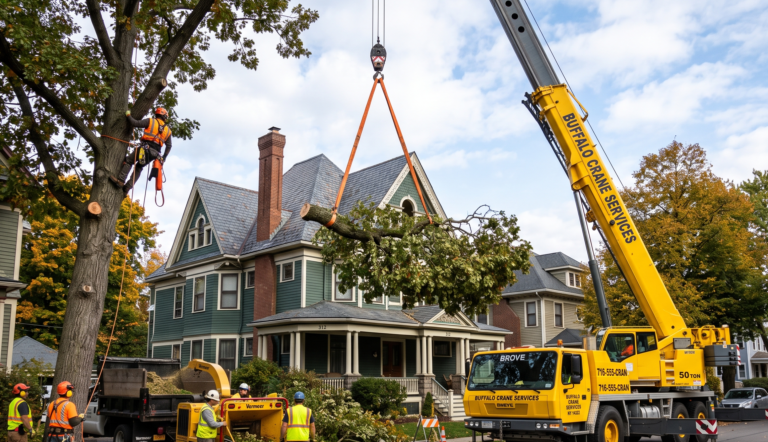
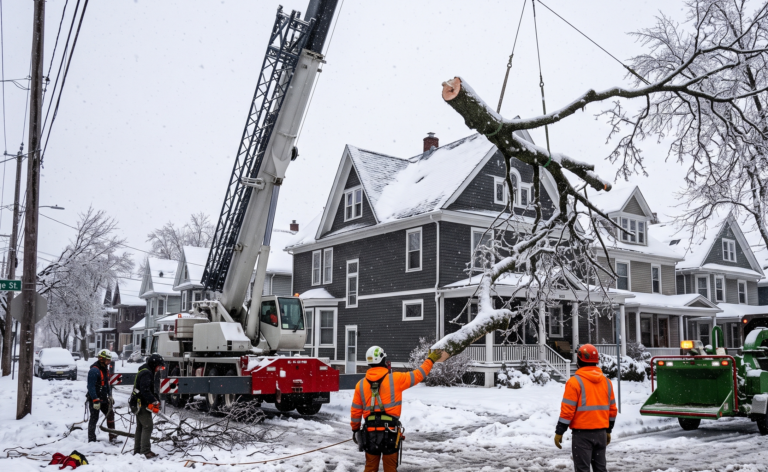
At Jensen Star Tree, our field arborists operate across our designated service footprint, bringing commercial chippers, compact backyard aerial lifts, and heavy-rigging cranes for tight-access suburban properties. Whether you manage heritage hardwoods on a residential estate or an ornamental landscape in a zero-lot-line neighborhood, our crews adhere strictly to ANSI A300 pruning standards and OSHA 1910.269 safety protocols.
Find Our Local Service Center & Service Map
To view our service area, get driving directions, or check live customer reviews, reference our official Google Business Profile map:
Frequently Asked Questions
Q: How do I find a certified arborist near me for winter oak and maple pruning?
A: Always verify that the company employs ISA-certified (International Society of Arboriculture) arborists with documented proof of general liability and workers’ compensation insurance. Contact Jensen Star Tree to book an on-site property evaluation with an arborist who understands local tree species.
Q: Do local municipal codes require permits to prune or remove yard trees?
A: Minor crown thinning and deadwood removal rarely require permits. However, significant structural reductions or work on protected heritage, boundary, or street trees often requires municipal authorization. Our team assists clients with local permit guidelines and code compliance before work begins.
Q: Can your tree crews access backyards with narrow gates or tight fences?
A: Yes. We maintain specialized compact rubber-tracked aerial lifts that navigate standard 36-inch yard gates, allowing our arborists to reach tall canopies without damaging lawns, driveways, or delicate garden beds.
Summary Checklist for Homeowners
- Inspect: Walk your property on a bright February morning to evaluate your deciduous trees while the canopy structure is clear.
- Identify: Separate your oaks, elms, and fruit trees (ideal for February cuts) from spring-flowering ornamentals like lilacs and magnolias (wait until post-bloom).
- Sanitize Tools: Use sharp bypass pruners and clean handsaws wiped down with rubbing alcohol to prevent spreading pathogens between cuts.
- Protect the Collar: Never make flush cuts against the trunk, and never leave long stubs.
- Call Certified Experts: For any branch larger than your forearm, limbs located near overhead wires, or high canopy work that requires climbing or bucket trucks, prioritize safety and rely on trained, insured arborists.
Frequently Asked Questions
Q: Can I leave pruned twigs and branches as mulch around the tree?
A: Clean, chipped branches make excellent organic mulch for your root zones. However, if the limbs were removed due to active fungal infections or bacterial blight, they should be hauled away and disposed of rather than mulched back onto the soil.
Q: Is late February still safe if spring temperatures arrive early?
A: If daily temperatures unexpectedly rise into the 60s and buds begin opening rapidly, the dormant window narrows quickly. Contact a certified arborist to evaluate whether late-dormant pruning is still appropriate for your specific species.