
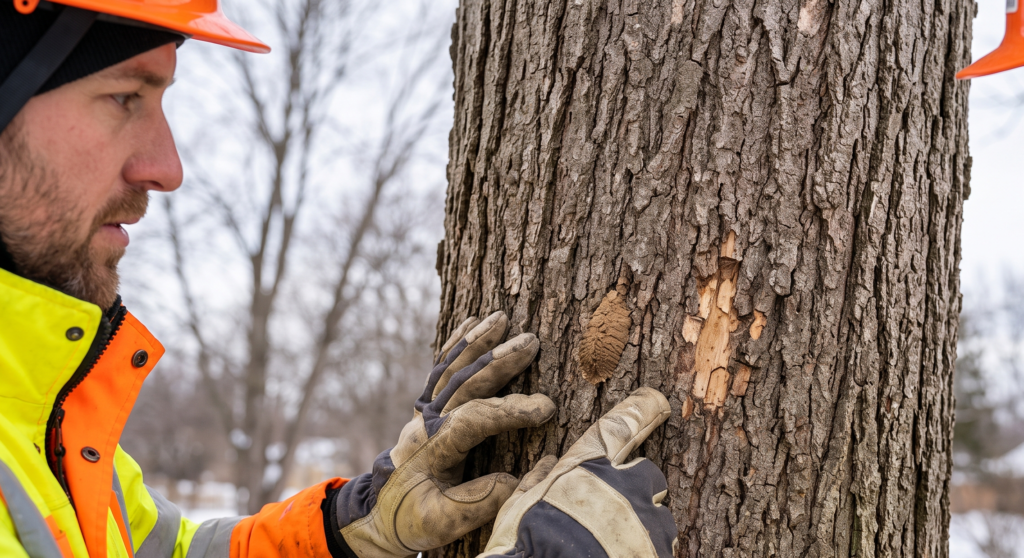
When winter grips Western New York and snow blankets the Niagara Frontier, most property owners assume tree pests have packed up for the season. That assumption is a costly mistake. If you own property in Buffalo, Amherst, Cheektowaga, Orchard Park, or anywhere across Erie County, the cold months leading up to spring are the most critical window you have to identify, control, and prevent destructive infestations. Specifically, two devastating invasive wood-boring and sap-feeding pests—the spotted lanternfly (Lycorma delicatula) and the emerald ash borer (Agrilus planipennis)—leave behind distinct signatures on dormant trees right now. Learning to identify these early warning signs before spring bud break gives you the power to protect your canopy, preserve property value, and stop catastrophic tree failure before warm weather accelerates internal wood rot and rapid egg hatching.
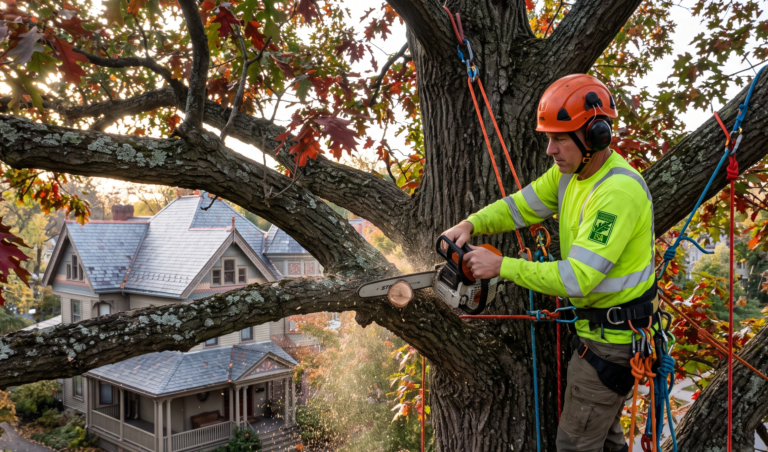
At JensenStar Tree Company, our ISA-certified arborists spend every winter inspecting canopies across Erie County. We see firsthand how unchecked invasive pests weaken structural limbs, compromise tree vascular systems, and turn majestic hardwoods into hazardous liabilities. Through our comprehensive plant health care and certified tree removal services, we help residential and commercial property owners identify latent infestations, protect high-value shade trees, and remove hazardous deadwood before lake-effect storms or spring gales trigger costly property damage.
Below is an extensive field guide detailing what these pests are doing during the dormant months, the exact physical clues hidden on your trunks and branches, how winter inspections work, and the actionable steps you need to take before spring arrives in Western New York.
1. The Winter Reality of Invasive Pests in Erie County
To outsmart invasive species, you have to understand how they survive sub-zero Buffalo temperatures and heavy lake-effect snow loads. Pests do not simply vanish when the thermometer drops; they enter specialized biological states designed to outlast freezing weather.
The Spotted Lanternfly (SLF) in Winter
Spotted lanternflies are planthoppers native to parts of China, India, and Vietnam. While the adult insects die off following the first hard freezes of late autumn, their legacy survives in the form of dormant egg masses.
A single female spotted lanternfly lays between 30 and 50 eggs, coating them in a waxy, protective secretion that shields them from biting winds, sub-zero wind chills, and moisture. These egg masses adhere to virtually any flat, outdoor surface:
- Tree trunks and upper branches (especially Tree of Heaven, maples, oaks, and black walnut)
- Smooth stone landscape boulders and concrete foundations
- Fence posts, decks, patio furniture, and firewood stacks
- Vehicles, campers, trailers, and outdoor sheds
When daytime temperatures consistently rise into the 50s in late spring (typically May in Erie County), those overwintered eggs hatch into hungry black-and-white speckled nymphs, climbing your trees to drain sap from the vascular system.
The Emerald Ash Borer (EAB) in Winter
While the spotted lanternfly attacks dozens of deciduous tree species, the emerald ash borer is an ecological assassin targeted almost exclusively at true ash trees (Fraxinus species—green ash, white ash, and black ash).
Unlike SLF, which overwinters as external eggs, the emerald ash borer spends winter safely insulated deep inside the tree’s inner bark. The immature larvae tunnel through the tree’s vital cambium and phloem layers, feeding on the tissue that transports water and nutrients between roots and crown. During the dead of winter, mature larvae curl into small chambers hollowed into the outer sapwood, entering a prepupal state.
By the time adult metallic-green beetles chew their way out in late May or June, the structural and vascular damage beneath the bark has already occurred. The tree has been systematically starved from the inside out.
Frequently Asked Questions
Do freezing Buffalo winters kill off spotted lanternfly eggs naturally?
No. Spotted lanternfly egg masses are covered in a dense, weather-resistant waxy coating that insulates them against sustained sub-zero temperatures. Research and field monitoring demonstrate that eggs can survive temperatures well below zero degrees Fahrenheit, meaning typical Western New York winter cold snaps will not eradicate them without manual removal or professional dormant oil treatments.
Why does the emerald ash borer survive beneath the bark during freeze-thaw cycles?
EAB larvae generate biological antifreeze compounds (polyols and glycerol) within their hemolymph that protect cellular walls from ice crystallization. Combined with the thick, insulating barrier of the tree’s outer bark, they remain shielded until spring pupation begins.
2. Early Signs of Spotted Lanternfly to Watch for Before Spring
Because adult spotted lanternflies are gone by January, your entire pre-spring monitoring strategy must focus on locating and eliminating egg masses, identifying host trees, and recognizing residue from previous seasons.
1. Mud-Like Egg Masses on Bark and Hard Surfaces
Fresh spotted lanternfly egg masses are roughly 1 to 1.5 inches long and about a half-inch wide.
- Fresh masses: When laid in late fall, they look like a smear of wet, smooth gray-brown mud or wet mortar.
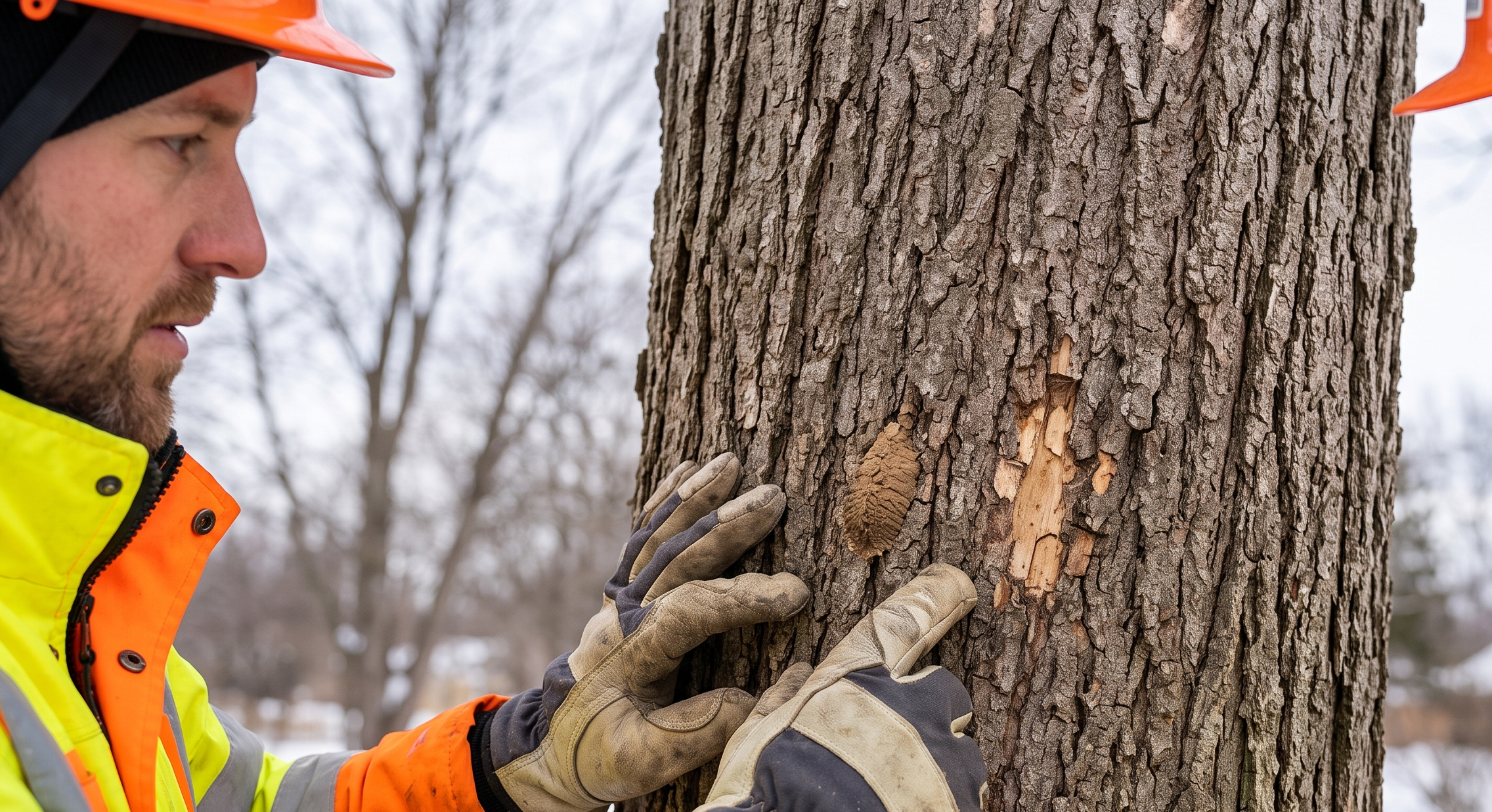
- Winter-aged masses: Over winter, weathering causes this mud-like protective coating to dry out, turn light grayish-brown, and develop micro-cracks—resembling a smear of dried gray plaster or stucco.
- Exposed rows: If the protective cover flaked off during windstorms, you may see two to four vertical columns of tiny, seed-like brown eggs lined up neatly side-by-side.
Look carefully around the southern and western exposures of tree trunks where sunlight warms the bark, but do not stop at eye level. Field observations confirm that over 80% of spotted lanternfly egg masses are laid higher up in the canopy, often on the undersides of horizontal branches where they are protected from snow accumulation.
2. Sooty Mold and Sticky “Honeydew” Residue
During late summer and fall, thousands of feeding lanternflies excrete a sugary, watery waste product known as honeydew. This liquid coats branches, the lower trunk, patio stones, deck boards, and lawn equipment parked beneath infested trees.
Over the winter, honeydew fosters the aggressive growth of black sooty mold. If you notice that the lower bark of a silver maple, oak, or willow looks blackened, charred, or covered in a dark, velvety crust, you are looking at old sooty mold. While the mold itself does not directly penetrate plant cells, its presence is a dead giveaway that a heavy sap-feeding infestation was present months earlier.
3. Tree of Heaven (Ailanthus altissima) Hotspots
Spotted lanternflies feed on over 70 plant species, including commercially critical grapevines in Western New York vineyards, but their preferred host is the invasive Tree of Heaven (Ailanthus altissima).
In winter, you can easily identify the Tree of Heaven throughout Erie County:
- Bark: Smooth, pale gray bark featuring faint, vertical fissures that look like the skin of a cantaloupe.
- Twigs and leaf scars: Thick, blunt twigs with large, heart-shaped or V-shaped leaf scars left behind after leaf drop.
- Seed clusters: Large, papery, twisted, winged seed clusters (samaras) that often cling to female trees right through winter snowstorms.
If you have a Tree of Heaven growing along your fence line, alleyway, or property perimeter, inspect it immediately. It functions as an insect magnet and is almost always the staging ground for an expanding infestation.
Frequently Asked Questions
How can I tell the difference between gypsy moth (spongy moth) egg masses and spotted lanternfly egg masses?
Spongy moth egg masses are velvety, fibrous, and yellowish-tan, resembling a small teardrop-shaped patch of felt. Spotted lanternfly egg masses are gray-brown, smooth to cracked, and look like a dried smear of cement, mud, or mortar rather than soft fur.
Will spotted lanternfly egg masses hatch inside my garage or home if brought indoors on firewood?
Yes. If firewood carrying unhatched egg masses is stored inside a heated home or attached garage, the artificial warmth can trigger premature hatching during mid-winter. Keep all unburned firewood outdoors in a covered rack until immediately before burning.
3. Early Signs of Emerald Ash Borer Before Spring
Because emerald ash borer larvae work entirely beneath the bark, they do not announce their presence openly until structural decline is well underway. However, winter provides an unexpected advantage: with leaves out of the way, hidden trunk anomalies, bark splits, and bird activity become glaringly obvious.
1. “Blonding” (Woodpecker Peeling)
The single most reliable, long-distance indicator of emerald ash borer in winter is woodpecker flecking, commonly known as “blonding.”
Native birds like the Downy Woodpecker and Hairy Woodpecker have exceptional hearing and can detect EAB larvae squirming beneath the bark. As they hunt:
- Woodpeckers use their beaks to chip away the dark, weathered outer bark of the ash tree.
- This exposes the creamy, pale inner bark beneath, creating irregular, light-colored patches that look as though the tree has been shaved with a wood rasp.
- If you look at an ash tree against a snowy Erie County sky and see light blonde patches scattered across the upper trunk and main branches, the tree is harboring active EAB larvae.
2. D-Shaped Exit Holes
When adult emerald ash borers emerge from the tree, they chew through the bark, leaving a distinct exit hole:
- The hole is roughly 3 millimeters (1/8 inch) across.
- Unlike round holes made by native borers or hornets, an EAB emergence hole has one completely flat edge and one curved edge, forming a perfect capital letter “D.”
- While new holes appear in late spring and summer, holes from previous seasons remain visible year-round. Check the lower trunk, bark ridges, and junction points of upper limbs.
3. Vertical Bark Cracks and Serpentine Galleries
As EAB larvae gorge themselves, their tunneling destroys the vascular tissue. The wood dies, loses moisture, and shrinks, causing the overlying bark to split vertically:
- Cracks are typically 2 to 5 inches long.
- If you inspect a crack closely (or if pieces of bark have sloughed away), you will see distinctive S-shaped, serpentine galleries packed with fine sawdust-like excrement (frass).
- These zigzag tunnels are the undeniable smoking gun of an emerald ash borer infestation.
4. Epicormic Sprouting (“Water Sprouts”)
When the upper canopy of an ash tree is choked off by internal larval galleries, the root system is still alive and desperately attempts to produce foliage. To survive, the tree activates dormant buds along the lower trunk and base of main limbs, sending out dense clumps of shoots known as epicormic sprouts. In winter, these look like dense broomsticks sprouting straight out of the lower trunk.
Frequently Asked Questions
Does woodpecker damage mean my ash tree is already dead?
Not necessarily dead, but heavily infested. Woodpeckers do not drill for sap; they target active insect populations. If you observe extensive blonding across more than a third of the upper canopy, larval populations are substantial, and immediate arborist intervention is required to evaluate structural stability.
Can mountain ash trees get emerald ash borer?
No. Despite the common name, mountain ash (Sorbus species) is not a true ash tree; it belongs to the rose family (Rosaceae). The Emerald ash borer strictly infests true ash trees in the genus Fraxinus (such as white, green, and black ash), along with occasional white fringe trees.
4. Comparing the Threats: SLF vs. EAB
Understanding how these two invaders contrast helps homeowners prioritize maintenance budgets and safety measures across their landscapes.
| Key Attribute | Spotted Lanternfly (Lycorma delicatula) | Emerald Ash Borer (Agrilus planipennis) |
| Primary Winter Life Stage | Egg mass (external, covered in wax/mud) | Prepupal larva (internal, beneath bark) |
| Target Tree Species | Broad host range: Tree of Heaven, Maples, Walnut, Willow, Oaks, Fruit Trees | Exclusively ash trees (Fraxinus americana, pennsylvanica, nigra) |
| Primary Mode of Damage | Sucking phloem sap weakens vigor and creates honeydew and sooty mold. | Larval girdling of vascular tissue; destroys cambium; causes rapid structural death |
| Direct Tree Mortality Risk | Moderate for mature shade trees; high for grapevines, saplings, and stressed trees | Extremely high (near 100% mortality) if untreated |
| Winter Visual Sign | Muddy gray-brown smear patches on bark and flat surfaces; black sooty mold | “Blonding” (flecked pale bark), D-shaped exit holes, S-shaped tunnels, sucker shoots |
| Pre-Spring Action | Scrape and destroy egg masses; schedule early systemic or barrier treatments. | Professional health assessment; trunk injection prep or immediate hazard removal |
Frequently Asked Questions
Which pest poses the more immediate threat to my home and physical property?
Emerald ash borer is the greater physical hazard. Because EAB destroys the inner structural integrity of the wood, infected ash trees rot quickly and become brittle, leading to sudden limb drop or trunk collapse onto homes and cars. Spotted lanternfly is primarily a vigor-sapping and nuisance pest that stresses trees and damages agricultural crops without causing sudden wood rot.
Can a single property in Erie County suffer from both pests at the same time?
Yes. If your property contains both ash trees and host hardwoods (like red maple, silver maple, or black walnut), you can easily face an active EAB infestation inside your ash trees while spotted lanternflies deposit egg masses on your maples and patio structures.
5. Why Winter Action Before Spring Is Essential
Waiting until trees leaf out in May or June puts Erie County property owners at a massive disadvantage. Winter-dormant management provides tactical advantages that disappear the moment temperatures rise.
Advantage 1: Superior Canopy Visibility
In summer, dense green foliage conceals dead scaffold branches, internal trunk decay, and subtle bark splits. In winter, the tree’s architecture is exposed. Certified arborists can inspect branch unions, evaluate structural integrity, spot high-elevation woodpecker activity, and locate lanternfly egg clusters that would otherwise be hidden under leaves.
Advantage 2: Breaking the Pest Reproduction Cycle
Every spotted lanternfly egg mass you eliminate before April stops up to 50 hungry nymphs from hatching into your yard. If you destroy 20 egg masses on a cluster of silver maples or your garage wall, that is 1,000 fewer sap-suckers draining your trees come June.
Advantage 3: Protecting Trees Before EAB Vascular Damage Escalates
Emerald ash borers resume feeding the moment temperatures climb. If an ash tree has lost less than 30% of its canopy to larval feeding, it can often be saved with micro-injections of emamectin benzoate. However, these systemic treatments must be timed around spring transpiration. Identifying the infestation in late winter allows you to get on your arborist’s schedule before the injection window closes.
Advantage 4: Avoiding Catastrophic Winter Branch Failures
Both pests leave trees structurally compromised. When emerald ash borers girdle an ash tree, the wood dries out and becomes extraordinarily brittle—a phenomenon arborists call “ash snap.” An ash tree that died or was hollowed out over the previous summer is at high risk of sudden, catastrophic failure under the weight of late-winter lake-effect snow or high-wind spring gales. Addressing these hazard trees while the ground is frozen prevents sudden damage to roofs, driveways, and overhead utility lines.
Frequently Asked Questions
Is it true that frozen ground makes winter tree removal safer for my lawn?
Yes. Frozen soil significantly reduces lawn compaction, rutting, and turf damage caused by heavy machinery, bucket trucks, or falling timber. Conducting removals in late winter before the spring mud thaw protects your lawn and landscaping beds.
If I see signs of emerald ash borer right now, can injections be applied immediately in the snow?
No. Systemic trunk injections require active sap flow and upward transpiration, which only occurs when trees have broken dormancy and produced leaves (typically mid-May through June). However, diagnosing the tree in winter ensures you are scheduled for immediate treatment the moment spring transpiration begins.
6. What Homeowners Can Do Right Now: Safe Pre-Spring DIY Protocols
If you want to take an active role in defending your yard before the ground thaws, follow these safe, effective practices:
The Scraping Protocol for Spotted Lanternfly Egg Masses
If you spot mud-like egg smears on tree bark, fence rails, or patio stones within easy reach from the ground, you can destroy them immediately:
- Equip yourself: Grab a plastic putty knife, a credit card, or a stiff paint scraper, along with a zip-top bag containing rubbing alcohol or hand sanitizer.
- Scrape firmly: Place the bag under the egg mass. Press the edge of the scraper firmly against the bark at the top of the mass and drag downward.
- Listen for the pop: As you scrape, you should hear or feel a distinct popping sensation. That sound confirms the individual eggs are rupturing.
- Submerge in alcohol: Let the scraped residue fall into the alcohol solution. Keep the bag sealed for several days to guarantee any intact eggs are rendered non-viable before disposal.
- What NOT to do: Do not simply scrape egg masses onto the ground. Eggs dropped onto the soil or leaf mulch can still survive winter insulation and hatch come May.
What Homeowners Should NOT Attempt
While scraping egg masses within arm’s reach is a great DIY task, other actions are dangerous:
- Never climb ladders with tools: Do not balance on a ladder with scrapers or saws on frozen winter ground. Professional crews use aerial bucket trucks and rated climbing systems to reach high limbs safely.
- Do not apply unverified chemical washes or torches: Never attempt to burn egg masses off tree trunks with blowtorches, and avoid spraying diesel fuel, bleach, or harsh home chemicals onto tree bark. These actions damage the tree’s cambium layer and create severe fire hazards.
- Do not attempt to fell dead ash trees yourself: Dead ash trees are notoriously unpredictable. Because the inner wood rots rapidly from EAB damage, branches can break off overhead from the vibration of a chainsaw (known as “widow-makers”), and trunks can snap prematurely without forming a predictable hinge.
Frequently Asked Questions
Where should I report spotted lanternfly findings in Western New York?
Take a close-up photo of the egg mass or insect, note your street address or GPS coordinates, and submit a report to the New York State Department of Agriculture and Markets via their online invasive species reporting portal, or contact the Erie County Cornell Cooperative Extension.
Can I spray the egg masses with ordinary household bug spray?
Over-the-counter surface bug sprays are ineffective against spotted lanternfly egg masses because the waxy, mud-like matrix prevents the insecticide from penetrating the eggshells. Manual scraping into alcohol or professional horticultural dormant oil applications are the only proven pre-spring control methods.
7. Professional Treatment and Management Solutions
For total property protection, DIY checks should be coupled with certified arborist management. At JensenStar Tree Company, we tailor our plant health care and tree care strategies to the microclimates and pest pressures of Buffalo and the surrounding towns.
Systemic Trunk Injections for Emerald Ash Borer
For high-value ash trees showing early to moderate symptoms (less than 30% canopy dieback), trunk injection is the gold-standard treatment:
- The Process: Small, precise injection ports are drilled into the root flare at the base of the trunk. Specialized equipment introduces an arboriculture-grade formulation (such as emamectin benzoate) directly into the tree’s active xylem.
- How It Works: As the tree awakens in spring, sap flow pulls the treatment up into the canopy, distributing it through the foliage and cambium. When EAB larvae feed, they ingest the compound and die immediately.
- Protection Duration: A single properly applied injection delivers up to two full years of comprehensive protection.
Targeted Treatments for Spotted Lanternfly
Managing lanternflies requires an integrated approach:
- Dormant Horticultural Oils: In early spring before buds open, arborists can apply dormant oil sprays directly to egg masses on accessible trunks and branches, suffocating the eggs before they can hatch.
- Systemic Bark Sprays and Soil Drenches: As foliage emerges, systemic treatments can be drawn up into high-risk host trees (such as prized maples, walnuts, and ornamentals), creating a toxic barrier for feeding nymphs and adults.
- Tree of Heaven Removal and Trap Trees: Eliminating male Trees of Heaven while chemically treating a few female “trap trees” is a proven silvicultural method for drastically collapsing local lanternfly populations.
Precision Tree Removal for High-Hazard Trees
When an ash tree has sustained severe girdling (more than 30–50% canopy loss) or when a neglected, decaying tree poses a direct threat to a home, deck, or power line, hazardous tree removal is the only responsible option.
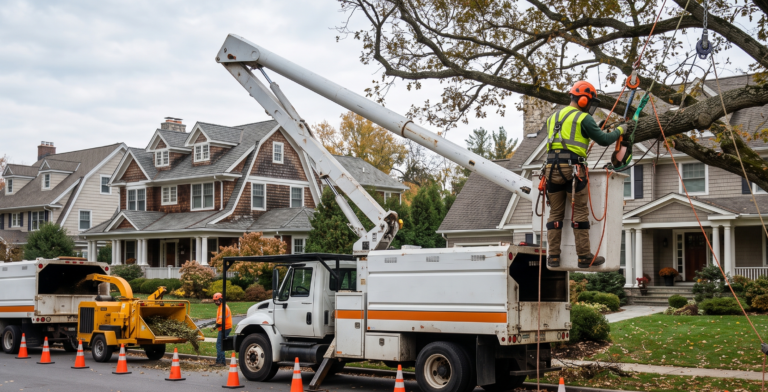
In older, tightly packed Buffalo neighborhoods like Elmwood Village, North Buffalo, or South Buffalo, property lines are tight and clearances are minimal. Felling a heavy, brittle tree in one piece is impossible. JensenStar Tree Company specializes in low-impact, tight-quarter removals using advanced rigging gear and our dedicated 50-ton hydraulic crane. We pick multi-ton sections vertically out of tight backyards, float them over rooftops, and lower them gently into the street without churning up your lawn or endangering nearby structures.
Frequently Asked Questions
Can an ash tree that has lost more than half its canopy still be treated?
No. Once canopy loss exceeds 30% to 50%, the internal vascular highways (xylem and phloem) are too severely severed to distribute injected chemistry to the outer canopy. At that stage, treatments fail, and the tree represents a hazardous liability that must be safely removed.
How does crane-assisted tree removal protect my lawn and neighboring properties?
Traditional removal involves dropping large timber chunks to the ground, which can gouge frozen soil, destroy retaining walls, or damage surrounding plantings. A 50-ton crane lifts each severed limb and trunk log straight up into the air, swinging it over roofs and fences directly onto the street or driveway for chipping, leaving your yard virtually untouched.
8. Tree Care & Pest Inspection Near Me: Serving Buffalo & Erie County
When invasive pests like the spotted lanternfly and emerald ash borer threaten your landscape, proximity and rapid response matter. Searching for a “certified arborist near me” or “emergency tree removal near me“ is often triggered by sudden hazards—like dead, borer-hollowed limbs threatening to drop during a late-winter blizzard or a spring storm.
JensenStar Tree Company provides rapid on-site hazard evaluations, preventative plant health care, and specialized crane removals across the greater Buffalo metropolitan area. If your home or commercial facility is located anywhere in the following Western New York service areas, our mobile crews are already working near you:
- City of Buffalo: Elmwood Village, North Buffalo, South Buffalo, Allentown, Black Rock, Delaware District, Parkside
- Northern Erie County: Amherst, Williamsville, Clarence, Kenmore, City of Tonawanda, Town of Tonawanda, Grand Island
- Southtowns & Eastern Suburbs: Cheektowaga, West Seneca, Orchard Park, Hamburg, Lancaster, Depew, East Aurora
Whether you need pre-spring egg mass scraping on large shade trees, preventive trunk injections, or tight-space crane removals, finding trusted local tree service near you is as simple as reaching out to our Montana Avenue team.
Frequently Asked Questions
How quickly can your team respond for tree inspections near me in Erie County?
We prioritize emergency tree hazard assessments and storm-damaged limb removals with same-day or 24-hour response across Buffalo, Cheektowaga, and Amherst. Routine pre-spring pest audits and tree health assessments are typically scheduled within 2 to 3 business days.
Do you handle municipal tree permits required in Buffalo or Amherst?
Yes. Certain municipalities across Erie County have strict ordinances regarding trees located in city rights-of-way or designated historic preservation zones. As licensed and insured local tree contractors, we assist homeowners in securing necessary work permits and utility clearances prior to service.
Protect Your Erie County Landscape with JensenStar Tree Company
Preserving Western New York’s urban and suburban canopy requires vigilance, local know-how, and proactive care. Don’t wait until warm May sunshine hatches thousands of lanternfly nymphs or causes an untreated, borer-ravaged ash branch to snap over your driveway.
At JensenStar Tree Company, our ISA-certified arborists bring scientific expertise, heavy-duty rigging capabilities, and deep local commitment to every property we evaluate. Whether you need a comprehensive pre-spring pest audit, precision dormant pruning, preventative micro-injections, or safe hazardous tree removal, we deliver reliable, fully insured tree care across Buffalo and Erie County.
- Business Name: JensenStar Tree Company
- Physical Address: 79 Montana Ave, Buffalo, NY 14211
- Direct Phone: (716) 703-5666
- Official Website: https://companyjensenstartree.com/
- Hours: Monday–Saturday: 7:00 AM–6:00 PM | 24/7 Emergency Tree Response